
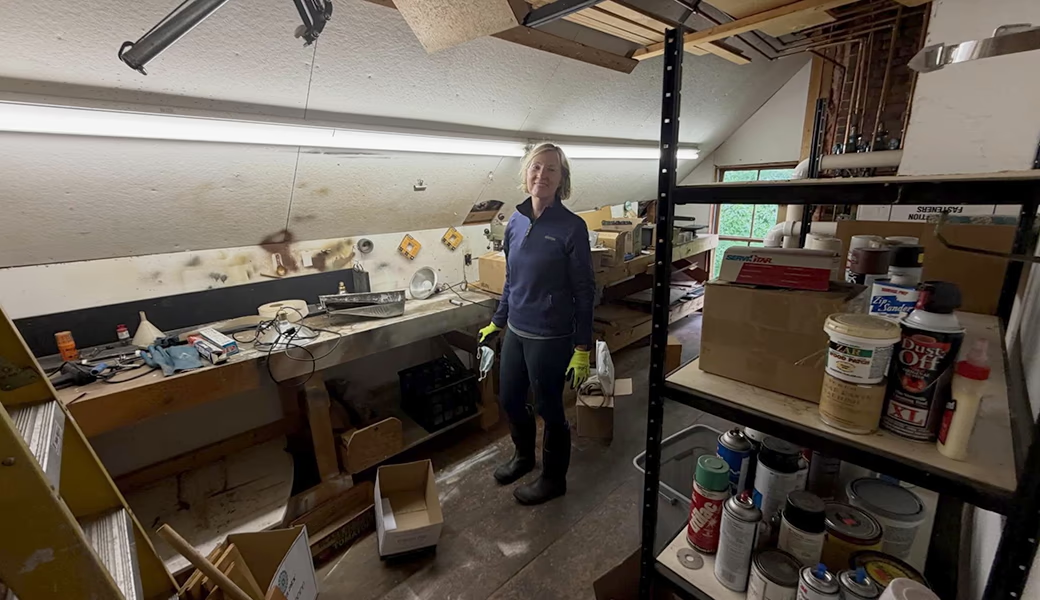
On a rainy Sunday in June, a crew of two dozen volunteers climbed into the attic of the Number Nine Schoolhouse and started hauling things out. No cameras, no ceremony. Just people in work clothes clearing decades of accumulated material from a room that needs to become something new.
The attic cleanout was one of two indoor priorities at the June 7 work party. The other was the upper classroom itself, where volunteers began the prep work that will eventually open the room to the community. Mops, muscle, and a willingness to spend a rainy Sunday doing unglamorous work.
Why the Upper Classroom Matters
The 2030 restoration plan has several moving parts, but the upper classroom sits at the center of almost all of them. It’s where FNNS envisions community programs, courses, gatherings, and events. It’s the reason the Buildings & Grounds Committee is working through permits. It’s the room that transforms the Number Nine Schoolhouse from a landlord of two nonprofit tenants into an active community space.
Getting there requires a change-of-use permit, mechanical upgrades, and a staged renovation. The June work party moved the upper classroom one step closer. Not the last step, but a real one.
The Volunteer Work Makes the Grant Work
Documented volunteer hours are not just a feel-good metric. Many historic preservation grants require evidence of community investment before they release funds. When two dozen people show up on a rainy Sunday, that’s evidence. It strengthens every grant application FNNS submits.
The Bee Fund Grant from the Bee App covered tools, supplies, food, and safety equipment for the day, and brought team volunteers along with it. That kind of partnership multiplies what a small nonprofit can do. Individual donors do the same thing: a gift from a neighbor helps unlock grant dollars that wouldn’t otherwise be accessible.
The upper classroom will open when the permits are approved, the mechanical work is done, and the renovation is funded. All three of those things depend on sustained support between now and 2030.