
The Northern Forest Canoe Trail stretches 740 miles, from Old Forge, New York, to Fort Kent, Maine. The nonprofit that stewards it runs its office from the lower level of a 1903 schoolhouse on Mill Brook Road in Fayston.
NFCT has been a tenant at the Number Nine Schoolhouse since 2023. Its staff work across New York, Vermont, Québec, New Hampshire, and Maine, so a Fayston address can look like an odd choice. It stops looking odd once you know where NFCT began.
Started in Waitsfield
Kay Henry and Rob Center founded NFCT in Waitsfield. Before that, they owned Mad River Canoe. Both now serve as emeritus directors on the NFCT board.
The trail was completed in 2006. It follows travel routes used by Indigenous peoples, settlers, and guides, and NFCT describes it as the longest inland water trail in the nation. Paddlers cover 23 rivers and streams and 59 lakes and ponds, with 65 portages that add up to more than 70 miles of carrying. The route strings together 45 communities.
Vermont and Québec share 174 of those miles. The route crosses Lake Champlain, follows the Missisquoi River, takes the Grand Portage over to Lake Memphremagog, and runs the Clyde and Nulhegan rivers down to the Connecticut River valley.
The Office on Mill Brook
The day-to-day work of the trail happens here. Operations Manager Marthe Peterson runs the office, fills map and guidebook orders, and answers membership and event questions. She lives on the Winooski River. Executive Director Karrie Thomas joined NFCT in 2014 and also sits on the board of the Mad River Trails Alliance.
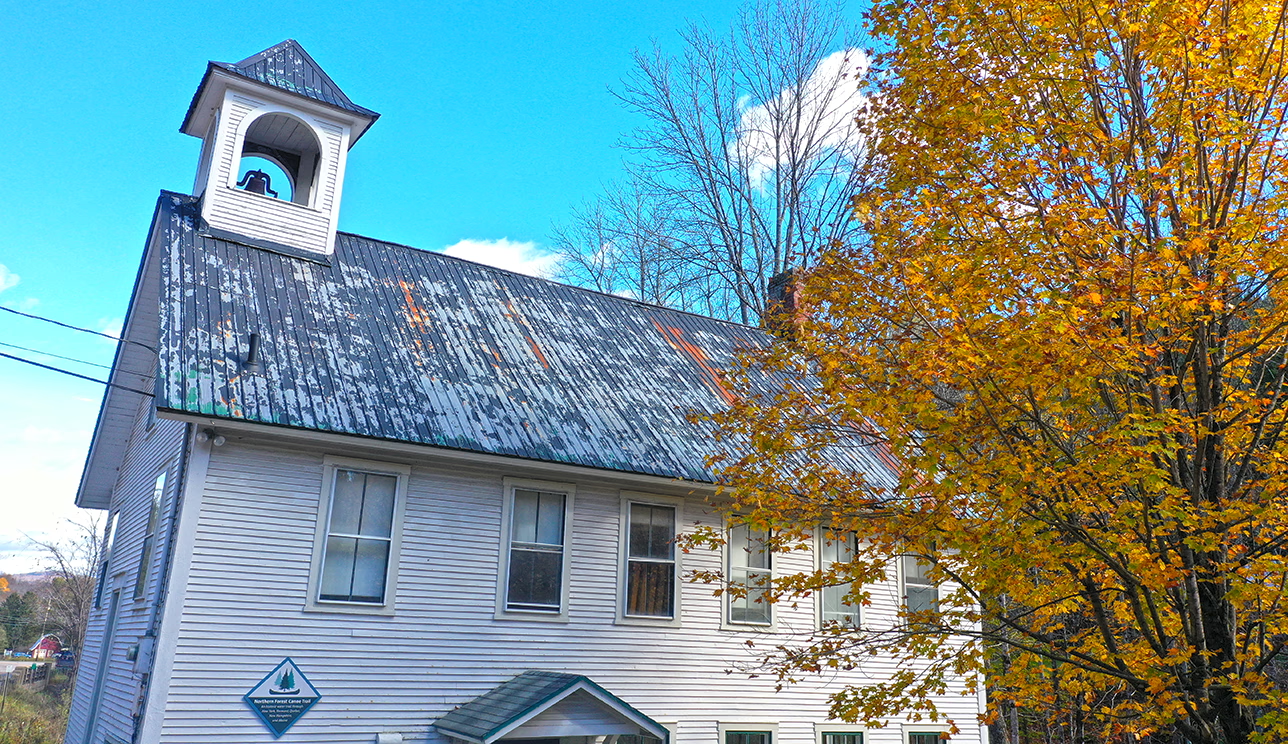
Last fall, NFCT got a neighbor. The Catamount Trail Association moved its statewide office from Burlington into the schoolhouse. NFCT looks after a water route across the Northern Forest. CTA looks after a 300-mile ski trail that runs the length of Vermont. The two now share the old lower classroom.
The building sits along Mill Brook, a main tributary of the Mad River, at the gateway to the Green Mountains. FNNS board member Kevin Russell has written that the setting gives the staff of both trail organizations a welcoming place to work.
What a Tenant Means to an Old School
NFCT’s lease matters to the schoolhouse. Long-term rental income from nonprofit tenants supports FNNS while the board works toward opening the upper classroom to the community. NFCT and CTA also bring daily life to the building.
NFCT’s work lines up with the schoolhouse mission, too. Its stewardship program relies on professional staff, summer intern crews, and volunteer trail maintainers, and the organization holds that everyone should have access to the outdoors. The FNNS mission asks the schoolhouse to be a place where people can serve, learn, honor, celebrate, and thrive. NFCT’s interns learn stewardship on the water each summer. Its volunteers serve the trail they paddle.
Neighbors Wanted
The Number Nine Schoolhouse served Fayston as a school for sixty years. Today two trail organizations work from its lower level, and FNNS is working to open the upper classroom to everyone in the Valley. That work takes neighbors: people who show up at workdays, lend a skill, or tell a friend what’s happening on Mill Brook Road.